
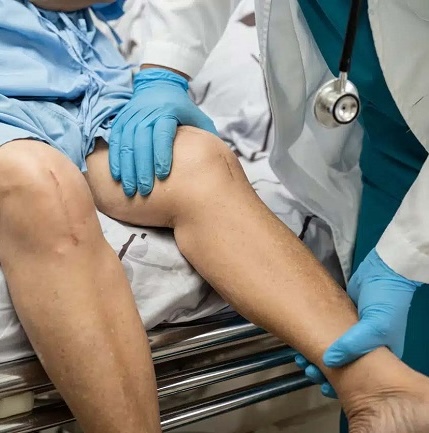
Knee arthritis happens when the joint surface becomes worn or inflamed, often leading to pain, stiffness, swelling, reduced walking distance, and difficulty with stairs. Treatment depends on arthritis severity, alignment, muscle strength, daily needs, and response to previous care.
When knee arthritis treatment may be considered
- Pain with walking, stairs, standing, sitting down, or getting up
- Morning stiffness, swelling, grinding, or reduced range of motion
- X-ray evidence of joint wear or narrowing of the knee joint space
- Symptoms that are no longer controlled with simple measures
Visit notes
- Standing knee X-rays help show joint wear and alignment under body weight
- Early and moderate arthritis may be managed with non-surgical treatment
- Advanced arthritis may require discussion of partial or total knee replacement
- Treatment choices should consider general health, expectations, and recovery support
Common patient questions about knee arthritis
What are the symptoms of knee arthritis?
Knee arthritis may cause pain, stiffness, swelling, grinding, difficulty with stairs, reduced walking distance, and pain after activity. Symptoms often develop gradually but can flare after overload.
Can knee arthritis be treated without surgery?
Many patients start with non-surgical care such as physiotherapy, strengthening, weight management, medication, activity changes, braces, or injections. Surgery is considered when pain and limitation remain significant.
When is knee replacement discussed for arthritis?
Knee replacement may be discussed when arthritis is advanced, daily life is strongly limited, pain affects sleep or walking, and non-surgical treatments have not provided enough relief.