
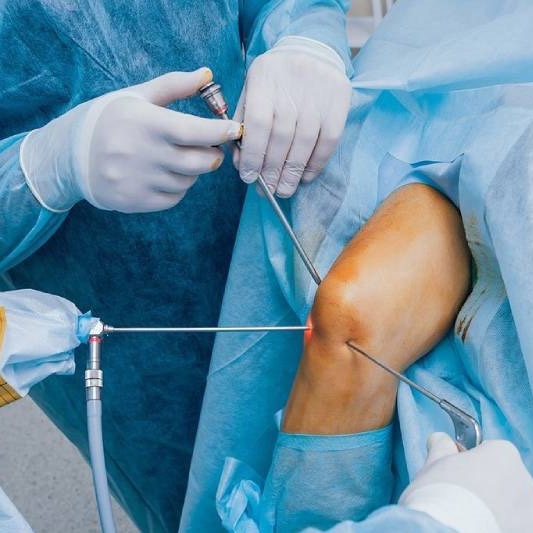
Knee ligaments help control stability during walking, pivoting, sport, and sudden direction changes. Ligament injuries may affect the ACL, PCL, MCL, LCL, or more than one structure, and treatment depends on instability, injury pattern, activity level, and associated meniscus or cartilage damage.
When knee ligament injury treatment may be considered
- Knee giving-way, instability, or lack of trust after injury
- Rapid swelling after sport, fall, twist, or traffic accident
- MRI report showing ACL, PCL, MCL, LCL, or combined ligament injury
- Need to return safely to sport, demanding work, or active daily life
Visit notes
- Early examination helps identify instability and associated injuries
- MRI is often used to confirm the injured structures
- Some ligament injuries heal with bracing and rehabilitation; others may need reconstruction
- A staged recovery plan is important for safe return to sport and work
Common patient questions about knee ligament injuries
How do I know if a knee ligament is torn?
Possible signs include a pop at injury, rapid swelling, instability, giving-way, pain, and difficulty returning to sport. Examination and MRI are commonly used to confirm the diagnosis.
Which knee ligament injuries need surgery?
Surgery depends on the ligament involved, degree of instability, associated injuries, activity goals, and response to rehabilitation. ACL and combined ligament injuries are more likely to need surgical discussion in active patients.
Can physiotherapy help after a ligament injury?
Yes. Physiotherapy is important whether treatment is surgical or non-surgical. It helps restore movement, reduce swelling, rebuild strength, and improve control before returning to activity.