
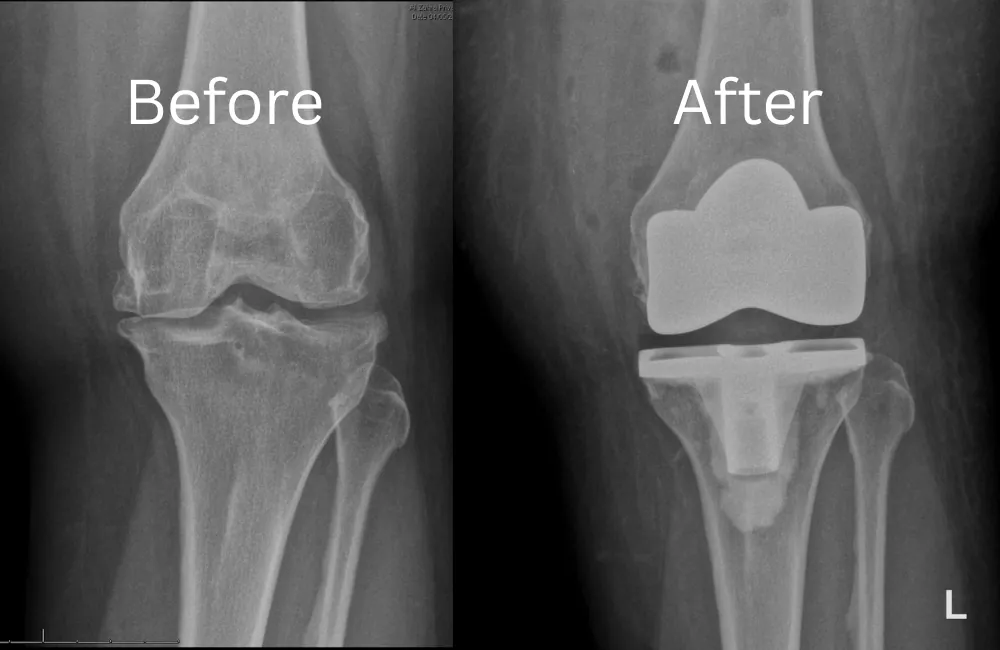
In knee replacement surgery, damaged parts of the knee joint are replaced with artificial components to reduce pain and improve movement. It is usually considered when arthritis or severe joint damage no longer responds well to non-surgical care.
When knee replacement surgery may be considered
- Advanced arthritis and chronic knee pain
- Major limitation with walking, stairs, or daily activity
- Insufficient improvement with medication, physiotherapy, injections, or lifestyle changes
Visit notes
- General health assessment and imaging are important before surgery
- Recovery includes wound care and physiotherapy
- Implant choice and recovery expectations are reviewed with the patient
Common patient questions about knee replacement surgery
When is knee replacement needed?
Knee replacement is usually considered when arthritis or joint damage causes severe pain, walking limitation, stair difficulty, and reduced quality of life, and non-surgical care such as medication, physiotherapy, injections, or weight management has not helped enough.
How long is recovery after knee replacement?
Recovery depends on age, general health, muscle strength, and physiotherapy. Many patients walk with support in the early weeks and gradually increase daily activity, while fuller recovery of strength and confidence takes longer.
What care is needed after knee replacement?
Wound care, correct medication use, clot prevention, regular exercises, and planned follow-up are important. Fever, wound redness or discharge, unusual severe pain, or shortness of breath should be checked urgently.